What?! You want to be asleep during program (Sunday's Midnight - 2am)? No, you just want'a you own speical copy of'a program to listen again and'a again. We understand, so we make'a special link for you to record program.
That'a right, Confessional go "ON DEMAND" and'a is "Extreme Radio Experience" or as'a we say ERE!
Click'a this button and you can schedule to record program and they email you notice when it'a done cooking!
Sarika Mehta spoke with professor of English, Anupama Jain, about her debut book, "How to be South Asian in America: Narratives of Ambivalence and Belonging." They discussed issues of race, identity politics and the new wave of South Asian American independent films and literature that have surfaced over the past fifteen years.
Norm underscores how May Day is about the recognition of class-structure in society. Abigail offers her perspective as a worker with the Portland Central America Solidarity Committee. They talk about the meaning of the song bread and roses and social justice organizing, the work of the Portland Liberation Organizing Council. Abigail summarizes what PCASC is up to now (a campaign to get Wells Fargo to divest private prisons, a know your rights workshop for the immigrant community, and other local organizing), climate justice work they've done, and a film about privatizing water in Boliva ("Even The Rain").
Bill Resnick has Terran Connally of the Portland Liberation Organizing Council, which has grown out of the Occupy movement, to talk about events and expectations for May Day 2012 in Portland. They consider the potential for this May Day to be the single greatest concerted activity in human history because of not only the Occupy movement agitating Americans, but the increasing unrest in Europe over neoliberal social domination. They talk about the shift from economic growth to a different model of development, which PLOC advocates and organizes in terms of "community-led solutions".
Norm Diamond and Abigail Singer co-host today's special May Day Old Mole, which focuses on the Lawrence Textile Strike of 1912, the Industrial Workers of the World (IWW), and events expected for May Day. We hear:
Norm Diamond talks with Steve Early, who attended a symposium in Lawrence Massechusetts about the Lawrence Strike of 1912 (here's a PDF of the schedule). They talked about why there is renewed interest in the Lawrence Strike, even as it was nearly erased from labor history until three decades ago; about the site of the symposium in one of the mills where workers went on strike; the role of the IWW's inclusive organizing in the Strike's success; and the inter-union cooperation of and rank-and-file participation in the symposium.
Guest host Kathleen Stephenson spoke with Linda Sawaya, Seidel Standingelk and Carol Matsuyoshi, local artists and activists involved in events surrounding the 20th anniversary of the WE SPEAK MURAL PROJECT, talk about the history of the project and the current installation of mural panels in the Columbia Gorge.
In 1991 the first Gulf War instigated the creation of an organization in Portland called ALANA: Asians, Latinos, Native Americans and African Americans for Peace and Justice. in 1992 ALANA organized a mural project called WE SPEAK presenting a minority view of the Columbus Quincentenary being celebrated that year across the nation.
Dr. Laila Amine on Arab immigration and race relations in France. Bread and Roses' host Del Criscenzo asks Laila, her compatriot, about the history of French Imperialism and Arab immigration to France. They discuss racism and race relations in their country as well as Maghrebi literature and its contributions to denouncing historical silencing. Laila Amine specializes in twentieth-century African American and African Diaspora literature with particular interest in comparative race and ethnic studies. Her current project, Algerian Paris: Belonging beyond Diaspora uncovers how the Algerian war (1954-1962) and its legacies shaped representations of a transnational Paris in African American, French, and Maghrebi cultural texts.
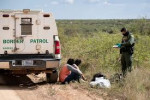
Most news stories of ICE raids on undocumented immigrants end with a headcount of people caught in the government's net. What's not seen on the evening news is the impact on communities where deportations tear families apart and create an environment of insecurity for those left behind. As deportations continue to occur in the Portland area, local communities are coming together to understand the issues driving these federal policies and to find solutions that are just and create true security.